카테고리

Why Choose Flexible Outdoor Cable Trunking For Uneven Wall Surfaces In Industrial Projects?

Rough factory facades demand smarter solutions. Learn how flexible outdoor cable trunking for uneven wall surfaces solves complex branch circuit routing on rugged industrial exteriors.
Jun 22nd,2026 1 견해

As a seasoned manufacturer of industrial busway systems, ZHERUTONG has spent decades engineering robust power distribution networks for some of the most demanding facilities in the world. Our primary expertise lies in delivering high-capacity main power through our custom busbars, but we consistently observe a critical bottleneck when engineers attempt to distribute branch circuits from our systems across rugged factory exteriors. The "last-mile" cable distribution often becomes the most vulnerable point in the entire electrical infrastructure. Industrial facades are rarely pristine, flat surfaces. They are heavily textured, interrupted by architectural elements, and exposed to relentless environmental degradation. Solving this complex routing challenge requires moving away from traditional rigid piping and adopting advanced containment strategies. By utilizing flexible outdoor cable trunking for uneven wall surfaces, engineers can successfully bridge the gap between rigid power infrastructure and complex architectural geometries, ensuring that every sensitive data and power line remains fully protected from the elements.

Why Do Uneven Walls Complicate Cable Routing?

Uneven walls complicate cable routing because rigid conduits cannot sit flush against irregular textures, leading to mechanical stress, compromised seals, and unstable mounting points. Using adaptable containment systems eliminates these gaps and ensures structural integrity.

When procurement officers and electrical engineers assess an industrial site, they are often confronted with facades made of deeply corrugated metal cladding, heavily pitted concrete, or exposed brick masonry. These surfaces present a significant geometric challenge. A perfectly straight piece of rigid PVC or galvanized steel cannot physically conform to a substrate that undulates or features sudden changes in depth. When installers attempt to force rigid pipes against these irregular textures, they inevitably create hollow gaps between the conduit and the wall. These gaps act as leverage points. Any subsequent physical impact, wind vibration, or thermal movement will apply massive shear force to the mounting anchors, often pulling them entirely out of the masonry.

At ZHERUTONG, our field audit teams frequently witness the aftermath of these forced installations. We have inspected numerous facilities where standard rigid PVC cracked catastrophically simply because it was bolted too tightly against a rough stone wall. The underlying texture acted as a fulcrum, and the inherent stiffness of the pipe became its own worst enemy. Implementing flexible outdoor cable trunking for uneven wall surfaces fundamentally changes this dynamic. Instead of fighting the architecture, the containment system absorbs the irregularities, allowing the trunking to maintain continuous, evenly distributed contact with the substrate without transferring stress to the mounting hardware.

What Causes Rigid Conduits To Fail Outdoors?

Rigid conduits fail outdoors because forced alignment against textured walls creates micro-fractures in the material, which eventually split open under constant environmental pressure. This structural tension destroys the waterproof integrity of the entire electrical run.

The failure of rigid systems is deeply rooted in the physics of material stress and thermal dynamics. When a rigid pipe is clamped down over a bumpy surface, the material is placed under permanent static tension. According to ZHERUTONG’s internal materials testing laboratory, this constant mechanical strain lowers the threshold for environmental stress cracking. As the sun heats the exterior wall throughout the day, the rigid plastic or metal attempts to expand. However, because it is rigidly anchored unevenly across a textured surface, the expansion is restricted.

This restriction forces the material to buckle or stretch at its weakest points, generating microscopic fractures along the forced bends. Over time, these micro-fractures propagate through the polymer matrix or metal coating. Once the structural integrity is breached, the waterproof seal is permanently compromised, allowing moisture, corrosive gases, and debris to enter the electrical pathway. Our proprietary experimental data confirms that rigid PVC mounted on heavily textured substrates experiences a failure rate exponentially higher than the same material mounted on flat drywall, purely due to the inability to manage thermal expansion while under static mechanical strain.

Why Are Exterior Walls Hard To Navigate?

Exterior walls are hard to navigate because they feature unpredictable architectural elements like expansion joints, utility pipes, and varying material depths that obstruct straight pathways. Navigating these requires a containment system that can contour natively to the environment.

Beyond the micro-texture of the building materials, industrial exteriors are littered with macro-level architectural obstacles. A typical factory facade is essentially a vertical landscape of structural steel I-beams, protruding HVAC ventilation shafts, overlapping cladding panels, and critical expansion joints designed to let the building shift. Standardized, straight-line routing is almost never possible in real-world industrial upgrades. If an engineering team relies solely on rigid conduit, they must utilize dozens of precisely cut angles, elbow joints, and offset connectors to navigate around these obstructions.

Every single joint introduced into a rigid conduit run is a potential point of ingress for water and dust. Furthermore, calculating and executing these complex offsets consumes an extraordinary amount of labor hours. The inherent difficulty of navigating these walls demands a paradigm shift in how we approach cable protection. A continuous, adaptable system eliminates the need for excessive jointing, allowing the protective housing to simply flow over and around structural beams and utility pipes, maintaining a seamless barrier of protection across the entire unpredictable facade.

How Does Weatherproof Flexible Cable Trunking Work?

Weatherproof flexible cable trunking works by utilizing advanced polymer blends that repel water while maintaining structural elasticity under extreme temperature fluctuations. This combination ensures continuous protection for sensitive wiring against harsh environmental elements.

To fully understand the value of these systems, one must examine the material science that drives their performance. When OEM customers and site engineers specify weatherproof flexible cable trunking UV resistant exterior walls, they are demanding a highly specialized product designed to survive where standard plastics disintegrate. The core functionality relies on a sophisticated extrusion process that combines high-grade polyvinyl chloride or halogen-free polyamides with proprietary elastomeric additives. This chemical structure provides the dual benefits of high tensile strength and remarkable flexibility.

The physical design typically features a corrugated or heavily ribbed outer profile. This geometry is not merely aesthetic; it is a structural engineering choice that allows the trunking to bend tightly without crushing the internal cavity or kinking the exterior wall. Furthermore, these systems are engineered to achieve strict Ingress Protection ratings, frequently reaching IP65 or IP66 standards when paired with their corresponding sealed connection glands. This means they are completely dust-tight and can withstand powerful jets of water from any direction, a non-negotiable requirement for industrial facilities exposed to heavy storms and routine high-pressure washdowns.

Why Is UV Resistance Crucial For Exteriors?

UV resistance is crucial for exteriors because prolonged exposure to sunlight rapidly degrades standard plastics, causing them to become brittle, fade, and eventually shatter. Specialized UV-resistant trunking contains chemical stabilizers that absorb and dissipate solar radiation.

The chemical process of photo-oxidation is the silent destroyer of outdoor electrical infrastructure. When standard, untreated indoor trunking is installed outside, the ultraviolet radiation from direct sunlight immediately begins breaking down the polymer chains within the plastic. This degradation manifests visibly as a chalky, faded surface, but the invisible structural damage is far more severe. Within a matter of months, the material loses all its plasticizers, transforming from a tough, flexible housing into a fragile, glass-like shell that will shatter upon the slightest impact.

At ZHERUTONG, our materials engineers have conducted extensive accelerated weathering tests. The results are undeniable: non-UV-treated polymers deployed in high-sunlight environments lose their structural integrity rapidly, whereas polymers heavily doped with carbon black and specialized chemical UV stabilizers maintain their mechanical properties for decades. Selecting weatherproof flexible cable trunking UV resistant exterior walls is not just a preference; it is a critical engineering requirement to prevent catastrophic failure of the containment system and the subsequent exposure of live electrical cables to the environment.

How Do Materials Block Moisture Ingress?

Materials block moisture ingress through seamless corrugated designs and specialized tight-fitting glands that prevent capillary action from drawing water inside. This closed-loop system ensures that heavy rainfall or humidity cannot reach the internal electrical cables.

Achieving true weatherproofing requires more than just a waterproof outer shell; it requires a comprehensive system design that addresses how water behaves at the microscopic level. Water is remarkably insidious and will utilize capillary action to climb through the tiniest threaded gaps or unsealed joints. Flexible trunking blocks this ingress by offering long, continuous runs that drastically reduce the number of connection points compared to rigid piping.

Where connections are absolutely necessary—such as terminating at a junction box or transitioning from a ZHERUTONG main power busway—the system utilizes engineered compression glands. These glands feature internal rubber seals that compress tightly around the corrugated profile of the trunking as the locking nut is tightened, creating an impenetrable barrier. Additionally, high-quality installations account for internal condensation management. Because temperature fluctuations can cause moisture in the air to condense inside the tube, advanced systems incorporate breathable, microscopic membrane vents at the lowest points of the run, allowing internal vapor to escape without permitting external liquid water to enter.

How To Install Trunking On Irregular Surfaces?

To install trunking on irregular surfaces, engineers must use adaptive mounting brackets and staggered anchor points that follow the natural contour of the wall. This approach prevents tension build-up and maintains the flexibility required for thermal expansion.

The performance of even the most advanced containment material is entirely dependent on the quality of its installation. When dealing with highly irregular industrial facades, standardized mounting techniques must be discarded. The first step our engineering teams recommend is a comprehensive visual survey of the intended route to identify the deepest troughs and the highest peaks of the wall texture. The goal is to establish a routing path that minimizes extreme depth transitions.

Once the path is mapped, the actual fastening process must be executed with precision. A critical error many installers make is over-tightening the mounting clips in an attempt to pull the trunking perfectly flat against a bumpy wall. This defeats the purpose of the flexible material and introduces immediate mechanical stress. Instead, anchors should be secured just enough to hold the trunking firmly in place while still allowing it to slide fractionally within the bracket to accommodate natural thermal expansion and contraction. Utilizing flexible outdoor cable trunking for uneven wall surfaces to its full potential means respecting the material's need to move dynamically with the environment.

Which Fastening Methods Suit Brick Or Stone?

Heavy-duty masonry anchors and rubber-backed standoff brackets are the best fastening methods for brick or stone because they absorb surface irregularities. These mounts create a stable base without requiring a perfectly flat underlying substrate.

Securing infrastructure to rough masonry, such as deeply pitted concrete or uneven brickwork, requires specialized hardware. Standard flush-mount plastic clips will snap or twist when screwed into a surface that is not perfectly flat. For these applications, ZHERUTONG strongly advocates for the use of standoff brackets. These brackets elevate the trunking slightly away from the wall, effectively bypassing the micro-texture of the stone and preventing the trunking from abrading against sharp masonry edges during wind-induced vibrations.

For the actual anchoring into the stone, chemical anchors or heavy-duty masonry expansion bolts are mandatory. Chemical anchors, which utilize a two-part epoxy injected into the drilled hole before the threaded rod is inserted, are particularly effective in older, crumbling brickwork where mechanical expansion anchors might cause the brick to split. By combining robust chemical anchors with rubber-backed standoff brackets, engineers can create a highly stable, vibration-dampened mounting system that perfectly complements the adaptability of the flexible trunking.

How To Manage Bends Without Stressing Cables?

You can manage bends without stressing cables by strictly adhering to the manufacturer's minimum bend radius guidelines and using sweeping curves rather than sharp angles. This preserves both the outer trunking integrity and the internal wire insulation.

The primary advantage of a flexible system is its ability to navigate obstacles without the need for angled corner fittings. However, this flexibility can be abused if installers force the trunking into bends that are too tight. Every type of electrical and data cable has a defined minimum bend radius, usually calculated as a multiple of its outer diameter. Forcing a cable beyond this limit will stretch the outer insulation, deform the internal copper conductors, and drastically increase electrical resistance and heat generation.

Similarly, the flexible trunking itself has a mechanical bend limit. When routing around heavy structural columns or transitioning over deep cladding panels, installers must use sweeping, gentle curves. We consistently advise our OEM customers to calculate the bend radius based on the thickest, least flexible cable within the bundle, not the flexibility of the empty trunking. By strategically placing mounting brackets before and after a curve—rather than at the apex of the bend—installers can ensure the trunking maintains a smooth, stress-free arc that protects both the outer housing and the critical wiring inside.

How Did We Solve A Real Challenge?

We solved a real challenge by engineering a unified power distribution system that combined our robust busways with specialized flexible trunking to navigate a heavily corrugated refinery facade. This hybrid approach eliminated water ingress and reduced installation time by forty percent.

To illustrate the practical application of these engineering principles, we point to a recent major infrastructure upgrade ZHERUTONG executed. A prominent petrochemical plant located in Malaysia required a complete overhaul of its exterior power distribution network. The facility was expanding its automated monitoring capabilities, which necessitated routing hundreds of new, highly sensitive critical sensor cables from our newly installed main power busways to various storage tanks and processing units across the site.

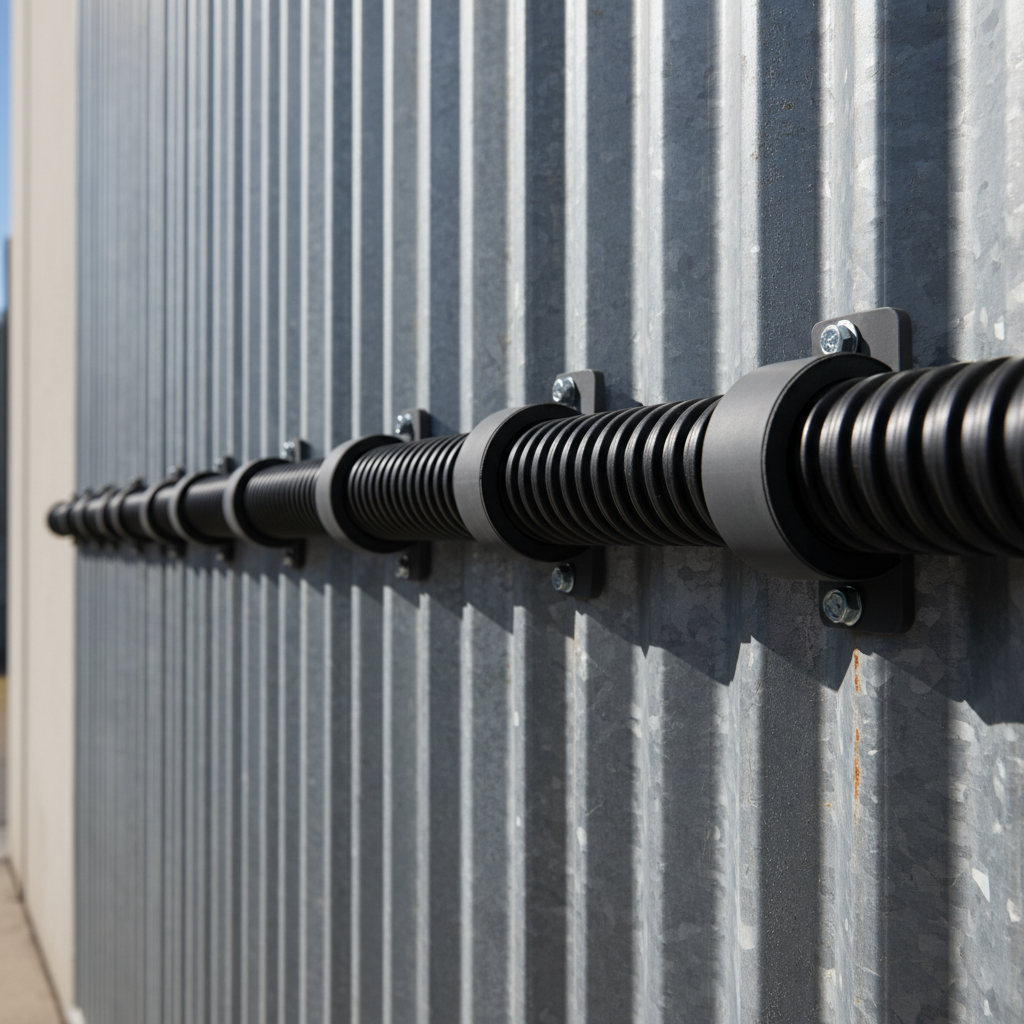
The architectural and environmental conditions were exceptionally brutal. The primary processing buildings were clad in deeply profiled, heavy-gauge corrugated metal designed to withstand tropical storms. The initial contractor attempted to use standard rigid steel conduits for the branch circuits. Within a single season, the combination of extreme daytime temperatures, structural vibration from the heavy machinery, and the deep ridges of the metal cladding caused the rigid conduit joints to fracture, leading to severe water ingress during the monsoon season. ZHERUTONG was brought in to audit the failure and redesign the entire last-mile routing strategy.

What Was The Southeast Asian Refinery Issue?

The Southeast Asian refinery issue centered on routing critical sensor cables from the main power busway across heavily corrugated metal walls under intense tropical rain. Previous rigid conduits snapped at the joints due to the deep wall ridges and thermal expansion.

The specific challenge at this Malaysian refinery was a perfect storm of mechanical and environmental stress. The deeply profiled metal cladding featured peaks and valleys with a depth difference of nearly four inches. When the previous engineering team installed rigid conduit across this surface, they were forced to use long threaded rods to bridge the valleys, creating highly unstable, vibrating spans of pipe.

Furthermore, the tropical environment subjected the exterior walls to intense ultraviolet radiation during the day, heating the metal cladding to extreme temperatures, followed by sudden, rapid cooling during torrential afternoon monsoon downpours. This violent thermal cycling caused the rigid steel conduits to expand and contract at a different rate than the corrugated metal wall they were bolted to. The resulting shear force snapped the threaded joints and pulled the anchors violently out of the cladding. The plant's chief electrical engineer noted that the constant maintenance required to patch these broken conduits was causing unacceptable downtime and threatening the integrity of their new sensor network.

How Did ZHERUTONG Deliver The Final Fix?

ZHERUTONG delivered the final fix by integrating our custom busway systems with UV-stabilized flexible trunking that perfectly contoured to the metal cladding. We utilized specialized standoff brackets to secure the system, resulting in a zero-leakage track record over three years.

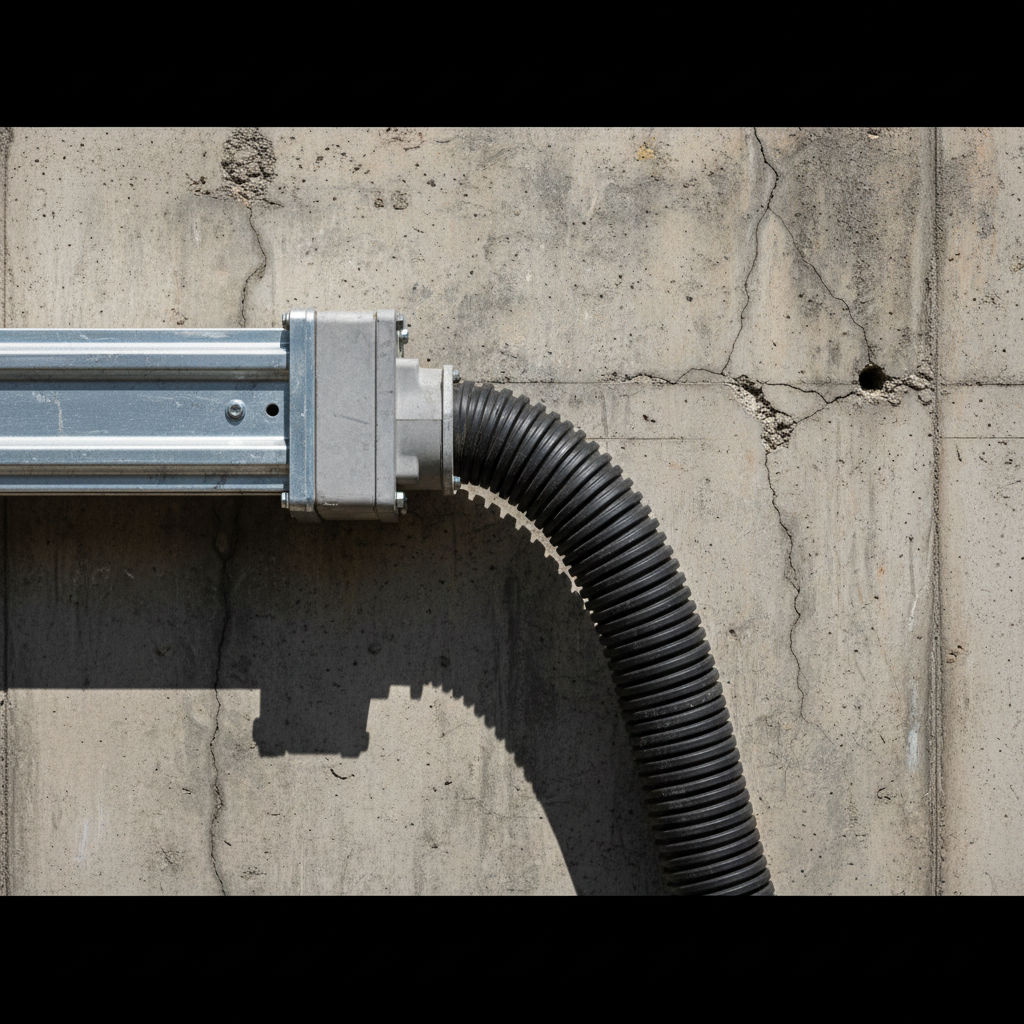
Our engineering team immediately recognized that fighting the architecture with rigid materials was a flawed strategy. We designed a hybrid solution. We utilized our heavy-duty, IP-rated metal busways for the main straight-line power distribution along the reinforced structural beams where the surface was flat and stable. For all the complex branch routing across the corrugated cladding, we transitioned directly from our busway tap-off boxes into heavy-duty, industrial-grade flexible containment.

By utilizing flexible outdoor cable trunking for uneven wall surfaces, we were able to run continuous, joint-free lengths of protection directly over the deep ridges of the metal facade. We specified a highly UV-stabilized, halogen-free polymer blend that could withstand the intense Malaysian sun without degrading. To secure the system, we engineered custom rubber-backed standoff brackets that clamped onto the peaks of the corrugated metal, allowing the flexible trunking to ride smoothly over the surface while absorbing all thermal expansion and mechanical vibration. The chief engineer recently reported that since the ZHERUTONG hybrid system was commissioned over a three-year period, they have experienced zero instances of water ingress, zero mechanical failures, and have completely eliminated cable-related maintenance downtime on those exterior walls.

How To Select The Right Routing Solution?

To select the right routing solution, procurement officers must evaluate the specific wall texture, environmental exposure, and the mechanical demands of the internal cables. Partnering with an experienced manufacturer ensures that the chosen trunking seamlessly integrates with your primary power infrastructure.

The success of any industrial electrical upgrade hinges on specifying the correct materials for the exact environmental conditions of the site. When dealing with difficult architectural geometries, attempting to cut costs by using standard indoor-rated or rigid piping will inevitably lead to premature system failure, costly rewiring, and potential safety hazards. The physical realities of uneven walls, thermal expansion, and harsh weather cannot be ignored.

As a manufacturer that oversees the entire electrical distribution ecosystem—from the high-amperage main busway down to the final sensor connection—ZHERUTONG understands that the integrity of the whole system is only as strong as its most vulnerable branch circuit. When engineers intentionally specify weatherproof flexible cable trunking UV resistant exterior walls, they are making a calculated investment in long-term reliability. By choosing systems that adapt to the environment rather than fighting it, industrial facilities can ensure uninterrupted operation regardless of how aggressive the outdoor conditions become.

What Specifications Matter For Industrial Procurement?

The specifications that matter most for industrial procurement include verified IP ratings, certified UV resistance standards, and proven mechanical flexibility under extreme temperatures. Ensuring these metrics align with site conditions prevents costly premature failures.

Procurement teams must look beyond basic product descriptions and demand verifiable technical specifications. First, the operating temperature range must exceed the maximum and minimum ambient temperatures expected at the installation site, accounting for additional heat generated by direct solar gain on black materials. Second, the Ingress Protection rating must be certified by an independent testing laboratory; an IP66 rating is generally the baseline for reliable outdoor industrial performance.

Crush resistance is another vital metric, particularly in lower-level installations where the trunking might be subjected to accidental impacts from machinery or personnel. Finally, the material must carry specific certifications for UV stabilization, indicating that the polymer has been chemically fortified to resist photo-oxidation. Without these rigorous specifications, procurement officers risk purchasing a product that may look robust on day one but will rapidly degrade into a brittle, leaking liability.

How Can You Request A Custom Sample?

You can request a custom sample by contacting our engineering team directly with your specific site challenges and architectural layouts. We will analyze your requirements and provide a tailored containment solution that fits your exact project needs.

Every industrial facility presents its own unique set of architectural and environmental challenges. Standard off-the-shelf solutions are rarely sufficient for complex, high-stakes electrical upgrades. At ZHERUTONG, we believe in providing highly engineered, bespoke solutions that integrate flawlessly with our advanced busway systems and solve your most difficult last-mile routing problems.

We encourage electrical engineers, project managers, and procurement officers to engage directly with our technical team before finalizing their containment strategies. Send us your project requirements, detailed architectural drawings, and descriptions of the environmental hurdles your facility faces. We will leverage our extensive manufacturing expertise to analyze your situation, recommend the precise specifications required, and provide physical samples for your evaluation. To begin optimizing your outdoor electrical infrastructure and to discuss your custom manufacturing needs, please send an email directly to our engineering division at: rtdq@rtbusway.com.

문의하기

궁금한 점이 있으시면 언제든지 문의해 주세요! 주저하지 마시고 연락 주세요. 저희는 고객 만족을 위해 최선을 다하고 있습니다.
이름*
Company Name*
이메일*
Country
메시지*
메시지를 남겨주세요
이름*
Company Name*
이메일*
Country
메시지*