카테고리

Why Do Data Centers Demand Specialized Busway Manufacturers for Power Distribution?

Picture a data center procurement engineer three months into a project, working through a shortlist of busway manufacturers assembled from a "top 10" ranking article. The list looks authoritative. The brand names are recognizable. But when the engineer starts asking specific questions — what tap-off pitch options do you offer for a 600mm row-based PDU layout?
Jul 2nd,2026 10 견해

Picture a data center procurement engineer three months into a project, working through a shortlist of busway manufacturers assembled from a "top 10" ranking article. The list looks authoritative. The brand names are recognizable. But when the engineer starts asking specific questions — what tap-off pitch options do you offer for a 600mm row-based PDU layout? what IP rating does your enclosure carry for raised-floor installation? can you deliver factory-tested 3000A sections on a 10-week schedule? — the answers start to fall apart. One manufacturer's "data center product line" turns out to be a standard industrial busway with a rebranded datasheet. Another has no IP-rated enclosure option at all. A third quotes a 20-week lead time on custom section lengths.

At ZHERUTONG, we've had this conversation more times than we can count. Engineers and OEM clients come to us after discovering that a manufacturer with impressive market presence has no genuine data-center-specific engineering capability behind its catalog pages. This article exists to close that gap. We'll explain why data center power distribution is a distinct engineering discipline, what specification parameters actually protect your project, and how to structure a manufacturer evaluation that holds up under real project pressure.

What Makes Data Center Power Distribution Different from Standard Industrial Use?

Data centers impose a combination of continuous high-density load, zero-tolerance for unplanned downtime, and rapid infrastructure scaling that standard industrial busway specifications were never designed to address simultaneously. A factory floor and a hyperscale server hall may both use 2000A busway runs, but the operating conditions, failure consequences, and deployment timelines are fundamentally different categories of engineering problem.

Why Does Continuous Load Density Change Everything?

Unlike factories that cycle machinery on and off, data centers run at sustained high ampacity around the clock, meaning thermal management in the busway enclosure is not a peak-event concern — it is a permanent operating condition.

In a manufacturing plant, heavy loads come on during production shifts and drop off during maintenance windows. The busway system gets thermal relief. In a data center, the load profile is essentially flat across every hour of every day. Modern hyperscale rack densities are reaching 10 to 30 kW per rack and climbing, which translates directly into sustained high-current draws on the distribution busway feeding those rows. At those sustained levels, conductor sizing cannot be optimized for intermittent duty — it must be sized for continuous operation with appropriate derating, and the enclosure must dissipate heat continuously without relying on ambient temperature drops that never come.

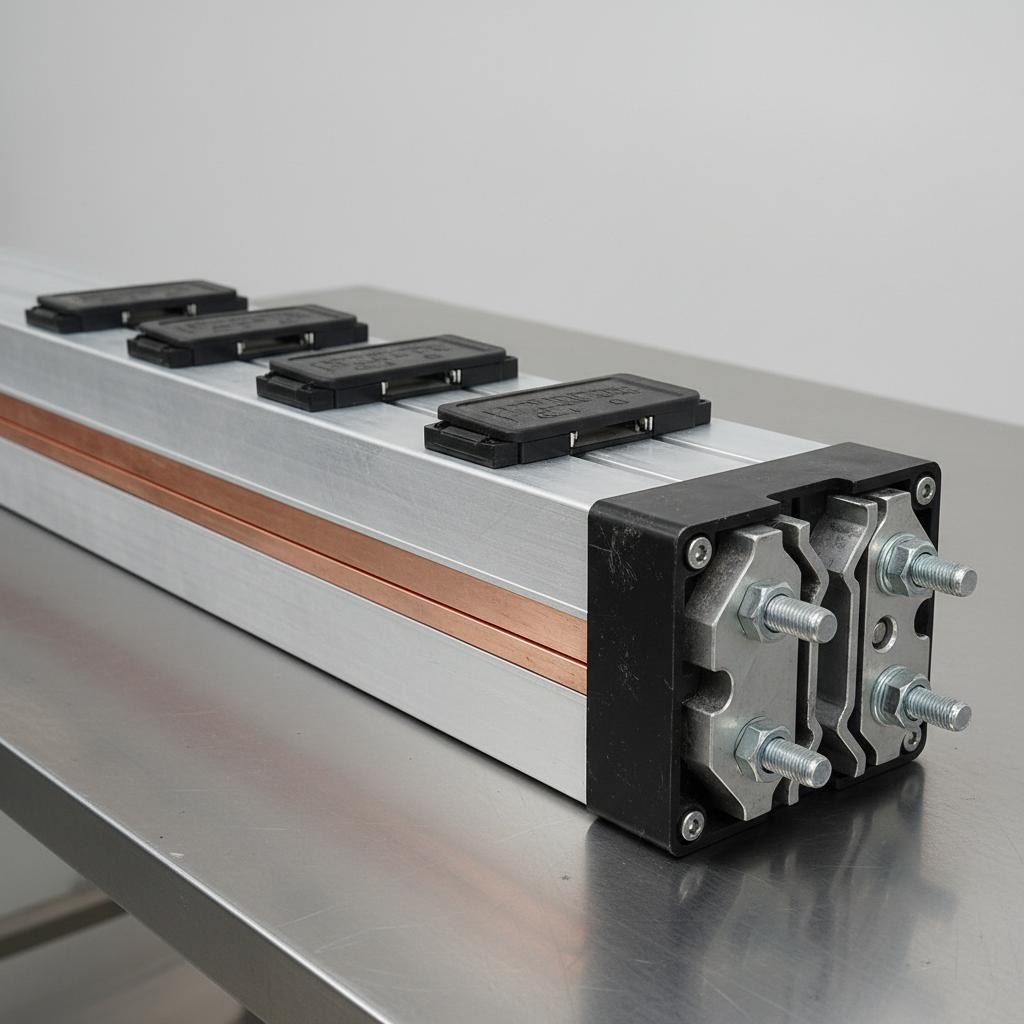
This is why the choice between T2 copper and aluminum conductors carries more weight in a data center than in most industrial applications. Copper's lower resistivity reduces I²R heating at sustained loads, which matters when your busway is running at 80% of rated capacity for years without interruption. Aluminum is a legitimate option for lower-ampacity branch distribution runs where weight and cost are constraints, but for main feeder runs in high-density environments, the thermal performance advantage of copper is not a marketing claim — it's measurable in conductor temperature at rated current.

Why Is Modular, Fast-Deployment Design Non-Negotiable for Data Centers?

Data center construction operates on aggressive commissioning schedules where a busway system that requires field-fabricated joints or custom conduit runs can delay server rack energization by weeks — a cost that no project budget absorbs quietly.

Prefabricated, plug-in busway systems installed in a row-based server hall can be energized significantly faster than field-wired conduit alternatives, simply because the joints are factory-assembled, torque-verified, and arrive on site ready to connect. When a construction team is racing to meet a commissioning date, every day of electrical installation time that can be moved from the job site to a controlled factory environment is a day recovered from the schedule.

Standardized tap-off unit spacing is equally critical. A data center's row-based PDU layout has specific pitch requirements — the distance between tap-off points must align with rack positions, and those positions are set by the mechanical design of the hall, not by what a busway manufacturer finds convenient to produce. At ZHERUTONG, we engineer pre-calculated section lengths and tap-off positions from the client's layout drawings before production begins, so the busway arrives on site as a pre-engineered system rather than a collection of standard parts that need field adaptation.

Modular busway also enables phased capacity expansion — a critical operational requirement for data center operators who build in phases and need to add capacity without deenergizing existing infrastructure. A well-designed plug-in busway run can accept additional tap-off units and extended sections while the original run remains live.

What Technical Specifications Should You Require from Busway Manufacturers for Data Centers?

When evaluating busway manufacturers for data center projects, the specification review must go beyond ampacity ratings and include IP protection class, short-circuit withstand strength, joint resistance consistency, and compatibility with your facility's tap-off and monitoring infrastructure.

The table below reflects the parameters we use in our own pre-qualification discussions with data center clients. It is not a marketing exercise — these are the numbers that determine whether a busway system will perform reliably over a 15-to-20-year facility lifespan.

Parameter

Why It Matters

Minimum Benchmark

ZHERUTONG Standard

Current Rating

Sustained load capacity

800A–4000A

Up to 5000A

IP Protection Class

Raised floor / under-floor environments

IP54 minimum

IP55 / IP65 options

Short-Circuit Withstand

Fault protection without enclosure failure

50kA / 1s

65kA / 1s

Joint Contact Resistance

Hotspot prevention at connections

≤10 μΩ

Factory-verified ≤8 μΩ

Conductor Material

Efficiency and thermal performance

ETP copper or 1350-H19 aluminum

T2 copper standard

Tap-Off Compatibility

PDU / rack power integration

Standardized plug-in units

Custom pitch available

Certification

Code compliance and insurance

IEC 61439 / UL 857

IEC + optional UL

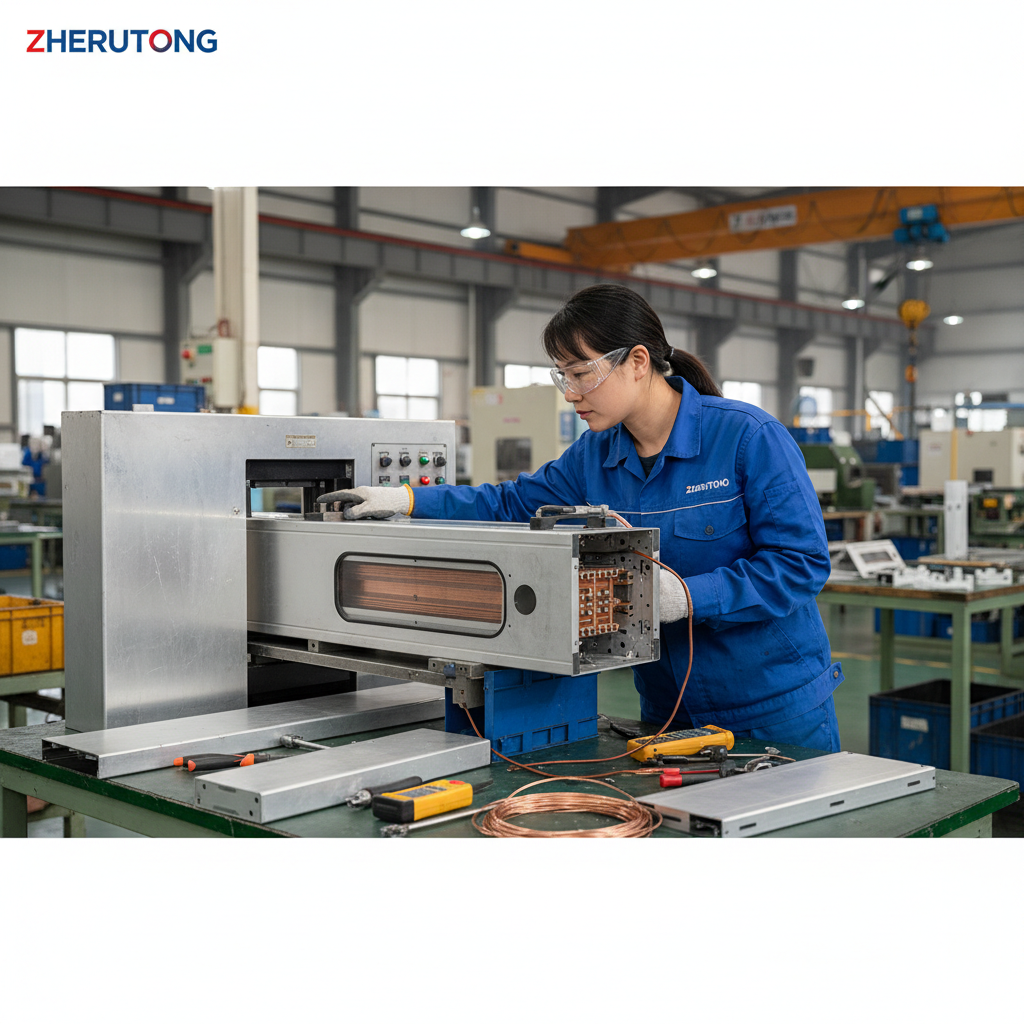
One area where our factory process directly protects client commissioning schedules is joint contact resistance testing. During a recent production run for a colocation facility client, our in-process resistance measurement caught a batch variance in one set of contact surfaces before assembly was completed. The affected components were pulled, the root cause was identified in the surface preparation step, and the corrected assemblies were completed and shipped within the original delivery window. The client never experienced the delay — because the problem was found in our factory, not on their job site.

Why Does IP Rating Matter More Than Most Engineers Expect?

In data centers with raised-floor cooling, pressurized air paths, and occasional condensation events near precision air conditioning units, an IP2X-rated busway enclosure that is adequate for a dry industrial floor becomes a liability.

IP2X protects against finger contact with live parts — it offers essentially no protection against moisture, condensate, or airborne particulates driven by pressurized underfloor plenums. A raised-floor data center environment can expose underfloor busway to condensation from precision cooling units, water from minor plumbing events, and fine particulate contamination from construction activity during phased buildouts. IP54 is a reasonable minimum for these environments. For facilities with known condensation risk near CRAC units, IP65 is the appropriate specification.

Overhead busway routing in hot-aisle/cold-aisle containment environments faces different but related concerns — the enclosure must maintain integrity against airborne contamination while operating at elevated ambient temperatures inside containment zones. ZHERUTONG's enclosure designs address both routing scenarios, with IP ratings verified through IEC 60529 test procedures rather than stated by design assumption alone.

How Does Short-Circuit Withstand Strength Affect Data Center Uptime?

A busway system that mechanically fails during a downstream fault event — even if the fault clears in milliseconds — can cause physical damage to the enclosure that forces a section replacement, turning a recoverable electrical event into a multi-day outage.

The electromagnetic forces generated during a high-current fault event are proportional to the square of the fault current. At 50kA or 65kA fault levels, those forces act on every conductor clamping point in the busway joint simultaneously. A busway system with inadequate clamping force or conductor support geometry can experience permanent deformation of the conductor stack, cracking of insulation materials, or joint separation — none of which are visible from the outside until the next thermal inspection or until the system fails under normal load.

Data center UPS infrastructure introduces an additional complication: the asymmetric fault currents produced during UPS bypass transitions or battery discharge events can stress busway joints differently than symmetrical utility faults. ZHERUTONG's short-circuit withstand testing accounts for asymmetric fault conditions, and our type test documentation reflects actual test results from third-party laboratories rather than calculated estimates.

How Should Engineers Evaluate and Compare Busway Manufacturers for Industrial and Data Center Projects?

Choosing a busway manufacturer for a serious infrastructure project is not a catalog exercise — it requires verifying manufacturing process controls, certifications, customization capability, and the supplier's demonstrated experience in your specific application environment.

Knowing how to choose a busway manufacturer for industrial projects follows a similar framework to data center evaluation, with the shared principle that datasheet claims require manufacturing process evidence behind them.

What Manufacturing Capabilities Should You Verify Directly?

The difference between a busway manufacturer that can quote your project and one that can actually execute it reliably comes down to whether their production line has the process controls, testing equipment, and quality management system to back up their datasheet claims.

Key checkpoints for a factory audit include: conductor fabrication process and alloy certification, insulation application method and cure verification, joint assembly torque control documentation, and final electrical test protocols for every shipped section. ISO 9001 certification is a useful baseline — it confirms that a quality management system exists — but it does not guarantee that the specific process controls relevant to busway performance are in place. We encourage engineers and procurement teams to conduct factory audits before contract award. The questions that matter most: What is your joint contact resistance test procedure and what are your acceptance criteria? What third-party short-circuit test records can you provide? How do you document and trace material certifications from incoming inspection through final delivery?

These are not difficult questions for a manufacturer with genuine process discipline to answer. They are very difficult questions for a catalog supplier operating without documented production controls.

Why Does Customization Capability Separate Serious Manufacturers from Catalog Suppliers?

Data center layouts are rarely modular enough to be served by off-the-shelf busway section lengths, which means a manufacturer without genuine custom fabrication capability will force your design to conform to their product — not the other way around.

When evaluating how to choose a busway manufacturer for industrial projects or data center applications, customization depth is one of the clearest differentiators between manufacturers with real engineering capability and those with a product catalog and a sales team.

We worked with an OEM client building a proprietary power distribution product for a colocation data center operator. Their PDU design used a non-standard tap-off pitch that matched neither our standard 500mm nor 1000mm spacing options. Rather than ask the client to redesign their PDU layout around our standard product, our engineering team reviewed their mechanical drawings, modeled the modified tap-off positions, confirmed that the structural integrity of the enclosure was maintained at the new spacing, and produced a custom section design within the project's engineering phase timeline. The first production run was delivered on schedule, with full type test documentation reflecting the actual custom configuration — not the standard product the documentation would have described if we had simply shipped standard sections with field-modified tap-off positions.

This is the distinction that matters in practice: a manufacturer with genuine custom fabrication capability designs around your project. A catalog supplier asks your project to design around their limitations.

Why Is ZHERUTONG a Credible Busway Manufacturer for Data Center Power Distribution Projects?

At ZHERUTONG, our focus on data center and heavy industrial busway applications has shaped every aspect of how we design, manufacture, and support our products — from the conductor alloy selection to the way we package and label sections for fast on-site identification during installation.

Our production scope covers current ratings from 800A through 5000A, with T2 copper as our standard conductor material and 1350-H19 aluminum available for applications where weight and cost optimization are priorities. Enclosure options include standard aluminum housing with IP55 rating and IP65 variants for higher-ingress-risk environments. All production is conducted under ISO 9001 quality management with incoming material certification verification, in-process dimensional and electrical testing, and a final type test documentation package included with every order shipment.

Our certification portfolio is built around IEC 61439-6 as the primary standard for busway systems, with project-specific UL 857 support available for North American installations. For international projects requiring dual certification, we work with clients during the specification phase to establish the certification scope and testing sequence that protects their project timeline.

The facilities we serve span colocation data centers, hyperscale campus deployments, and edge computing installations across multiple geographic regions. Our engagement model covers the full project lifecycle — from initial specification review and drawing coordination with MEP engineers and EPC contractors, through production, factory acceptance testing, and delivery logistics for international projects. We do not hand off technical responsibility to a distributor at the point of order placement. The engineering team that reviewed your drawings is the same team that answers questions during installation.

Our production capacity supports high-volume orders with realistic lead times, and we maintain transparency about those lead times during pre-qualification rather than committing to schedules we cannot meet. Every delivery includes a complete documentation package: material certifications, in-process test records, final electrical test results, and type test certificates from accredited third-party laboratories.

---

FAQ — What Do Engineers and Procurement Teams Ask Most About Data Center Busway?

What current ratings are typically required for data center busway systems?

Most data center main distribution busway runs operate between 1600A and 4000A, while branch distribution to individual rows or zones typically ranges from 400A to 1600A depending on rack density and PDU configuration. High-density AI compute deployments are pushing main feeder requirements toward 4000A and above as rack power continues to increase.

Is copper or aluminum conductor busway better for data center applications?

Copper conductors offer lower resistivity and better performance in high-density sustained-load environments, making them the preferred choice for main feeder runs in data centers. Aluminum is a cost-effective option for lower-ampacity branch distribution where weight and budget are constraints, but the thermal performance difference becomes significant at sustained loads above 1600A.

How do busway manufacturers support fast-track data center construction schedules?

Manufacturers with pre-engineered modular section designs, factory-tested assemblies, and clear project documentation packages can compress on-site installation time significantly compared to field-fabricated alternatives. The key is confirming these capabilities — including custom section length availability and tap-off position flexibility — before contract award, not after drawings are finalized.

Can busway systems be expanded after a data center is commissioned?

Yes — one of the primary advantages of plug-in busway over conduit-based distribution is the ability to add tap-off units and extend runs without deenergizing the entire distribution circuit, which directly supports the phased capacity expansion model most data center operators rely on. This requires that the original installation include sufficient physical space and that the manufacturer's tap-off system supports field addition of units without section replacement.

What certifications should a busway manufacturer hold for international data center projects?

IEC 61439-6 is the foundational standard for busway systems in international projects, while UL 857 is required for North American installations. Projects spanning multiple regions may require both, and your manufacturer should be able to provide third-party type test documentation — not self-declared compliance — for whichever standards apply to your project jurisdiction.

---

If you're specifying busway for a data center project — whether you're an MEP engineer finalizing single-line drawings, a procurement specialist evaluating manufacturer qualifications, or an OEM client building a custom power distribution product — we'd like to hear about it. Send your project requirements, layout drawings, or custom specification requests directly to our engineering team at rtdq@rtbusway.com. We respond to technical inquiries with engineering input, not just a quote form.


문의하기

궁금한 점이 있으시면 언제든지 문의해 주세요! 주저하지 마시고 연락 주세요. 저희는 고객 만족을 위해 최선을 다하고 있습니다.
이름 *
Company Name *
이메일 *
Country
메시지 *
메시지를 남겨주세요
이름 *
Company Name *
이메일 *
Country
메시지 *